We Need Your Support
Donations are tax deductible and you will receive a charitable tax receipt for 100% of your gift.

Act Now

Empower U: Learn to Access Your Disability Rights Training on Canadian Human Rights, the Convention on the Rights of Persons with Disabilities (CRPD) and its Optional Protocol (OP) training aims to increase awareness of how to address discrimination using more familiar Canadian human rights laws such as Human Rights Codes and the newer international Convention on the Rights of Persons with Disabilities (CRPD). This is training for persons with disabilities by persons with disabilities. The training is part of a project funded by Employment and Social Development Canada and implemented by the Council of Canadians with Disabilities (CCD) in collaboration with Canadian Multicultural Disability Centre Inc. (CMDCI), Citizens With Disabilities – Ontario (CWDO), Manitoba League of Persons with Disabilities (MLPD) and National Educational Association of Disabled Students (NEADS). Read more.
Euthanasia/Assisted Suicide
CCD is committed to the principles of self-determination and the positive promotion of the image of Canadians with disabilities in society in a manner that is consistent with the principles of equality, personal security, freedom of conscience and human dignity.
CCD believes that the devaluation of the lives and experiences of persons with disabilities has been used to justify acts of violence against people with disabilities, including the murder of people with disabilities.
CCD opposes actions that may serve to further devalue the lives of people with disabilities in Canada or promote the negative stereotypes about people with disabilities as suffering individuals in need of state regulated assistance to end our lives.
CCD opposes any government action which denies people with disabilities their constitutional rights to equality, personal security, and human dignity.
CCD is committed to actions which promote a positive image of persons with disabilities.
CCD opposes government action to decriminalize assisted suicide because of the serious potential for abuse and the negative image of people with disabilities that would be produced if people with disabilities are killed with state sanction. (Policy statement passed by the CCD National Council of Representatives on June 8, 1996.)
Recent Work
February 26, 2024
C-62: CCD, ARCH, Inclusion Canada, DAWN Canada Urged Changes to MAiD Bill - February 23, 2024
View media conference. Read more.
November 25, 2021
An Open Letter from the Council of Canadians with Disabilities (CCD) Concerning the Canadian Psychiatric Association Position Statement on Medical Aid in Dying (MAiD)
The Council of Canadians with Disabilities (CCD), a national human rights organization of people with disabilities working for an equitable, accessible and inclusive Canada, is very concerned about the approach taken on Medical Aid in Dying by the Canadian Psychiatric Association (CPA) in its Position Statement. CCD joins others in calling upon the CPA to reform its Position Statement on MAiD. Read more.
March 15, 2021
CCD Disappointed by House of Commons Yes Vote on Bill C-7 (Medical Aid in Dying)
The MAID regime that will be authorized by the Bill will put vulnerable people with disabilities in harm’s way by making it easier to access medical aid in dying. While many people with disabilities cannot access the disability-related supports that they need to live dignified lives in the community, they will be able to get Medical Aid in Dying. The Bill creates a separate track, whereby people with disabilities can access MAID, even if they are not at end of life. Even people experiencing a mental health crisis will have access to MAID. “We are extremely concerned that people with disabilities experiencing a temporary crisis will accept MAID and die needlessly,” states Smith. Read more.
More on Euthanasia/Assisted Suicide
January 29, 2021
UN Human Rights Experts' Statement Condemning Medically-Assisted Death for People with Disabilities Not at End-of-Life Means that Canada is No Longer an International Leader in Human Rights
November 7, 2020
COUNCIL OF CANADIANS WITH DISABILITIES DENOUNCES TRUDEAU GOVERNMENT'S RE-INTRODUCTION OF UNAMMENDED BILL C-7 ON MEDICAL AID IN DYING AS "HEAD-IN-THE SAND MENTALITY" THAT ENDANGERS THE LIVES OF CANADIANS WITH DISABILITIES
November 7, 2020
The Council of Canadians with Disabilities Supports Quebecer, Jonathan Marchand, as he brings his cage in front of the National Assembly in Quebec to obtain his and his friends' release from long-term care facilities
September 4, 2018
CANADA'S MEDICAL ASSISTANCE IN DYING REGULATIONS FALL SHORT
April 15, 2016
Bill C-14 Does Not Go Far Enough to Protect Vulnerable Canadians
March 29, 2016
Vulnerable Persons Standard
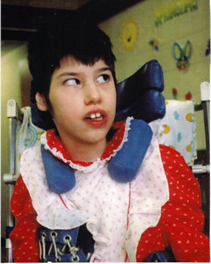
Tracy Latimer
The Latimer Case
The Latimer case directly concerned the rights of persons with disabilities. Mr. Latimer's view was that a parent has the right to kill a child with a disability if that parent decides the child's quality of life no longer warrants its continuation. CCD explained to the court and to the public how that view threatens the lives of people with disabilities and is deeply offensive to fundamental constitutional values. Learn more.